
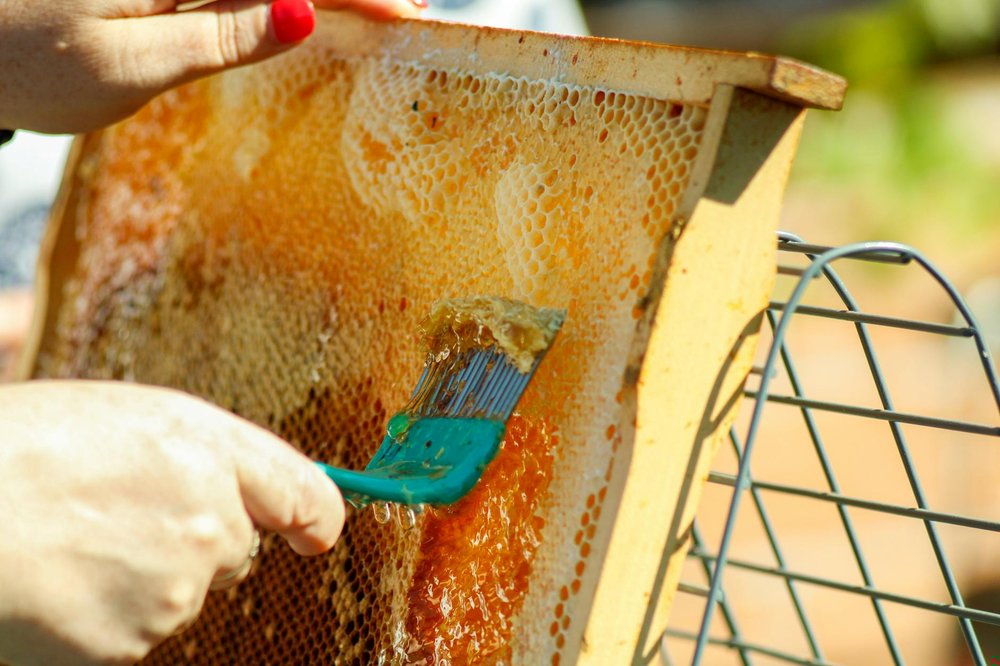
Learn advanced beekeeping and produce your own honey.
🌍 Anywhere🔄 Repeatable👤 18+
learningsustainabilitynature
Master colony management, disease prevention, and honey extraction through hands-on training with experienced beekeepers. You'll learn to read hive behavior, manage seasonal cycles, and harvest liquid gold while supporting local pollinator populations. The reward is jars of your own raw honey with flavors that reflect your local landscape.
Difficulty
60/100Hard
💰
Cost
$800 – $3,000
⏱
Time
longer
👥
People
1+
🌳
Setting
outdoor
📅
Season
any
🎒
Equipment
bee suits, hive tools, smoker, beehives
People who tried this
“On July 5, (just two months after buying my first colony), I prepared my kitchen with cardboard on the counters and floor. I got a big plastic tub, a large honey knife (that came in my kit), a large stainless steel cooking pot, cheese cloth, colanders (for straining) and utensils for mashing. I also picked out some clean, dry jars with lids I had been saving for this occasion. Then I went outside and smoked my beehive entrance. From the upper honey super I chose one medium frame that looked full of capped honey on both sides, and shook off the bees. I gave a couple puffs of smoke and lightly brushed bees off and set that frame in a box with a lid. Moving the box near my house, I opened it and swept off the last few stubborn bees, before bringing the frame into the house and set it in the plastic tub. After carefully cutting the comb out of the frame, I crushed it, or began mashing it. Once it was all mashed together, I poured the mix into cheesecloth that was sitting in a colander on top of the stainless-steel pot. [...] In the end, I collected 50 ounces of honey (in two jars). Amazing, right?? This was the most exciting thing I had done in a long time! There was something extremely satisfying about collecting honey similar to the way it had been done for thousands of years.”
“We suited up, opened the hive and, not to be biased or anything, discovered that we have the best bees on the planet! Gentle, healthy and abundant, they’d already been hard at work making us a welcome home present: lots and lots of honey. Despite having a million other things on our plate regarding the move and getting the farm in working order, honey harvesting jumped to to the top of our to-do list. With some loaned equipment and the guidance of our bee mentor, we pulled 15 full frames of honey from the hive: nine left by the previous owners containing fall-made honey and six with newer spring honey. Rather crudely, we uncapped the comb using a dull kitchen knife, but the honey oozed out with amazing beauty. The sticky syrup drenched our fingers, and we couldn’t resist helping ourselves to more than our fair share of taste tests.”
“Harvesting honey from my own backyard hive was not an overnight success by any means. My first colony was established in March 2023, so it took over a year for the hive to grow to the point where extracting some honey could even be considered. The process of harvesting the honey was quite easy. I simply brushed off the few bees that were on the honey frame and brought it into the kitchen. Then, I carefully scraped the honey with intact honeycomb into a large bowl as you can see above. After the honey was removed from the frame, I placed it on the patio propped up on the side of a chair so both sides were easily accessible. The patio is not far from the hive, so the bees easily discovered it and quickly began the clean-up of any sticky remnants.”
Similar challenges
Add this to your bucket list and start crossing off your goals.
Add to my bucket list